
Over 800 straight lines, 300 geometric patterns, and 70 animal figures stretch across 175 square miles of arid Peruvian desert. These pre-Hispanic geoglyphs reveal their massive scale only from the sky, 400 kilometers south of Lima.
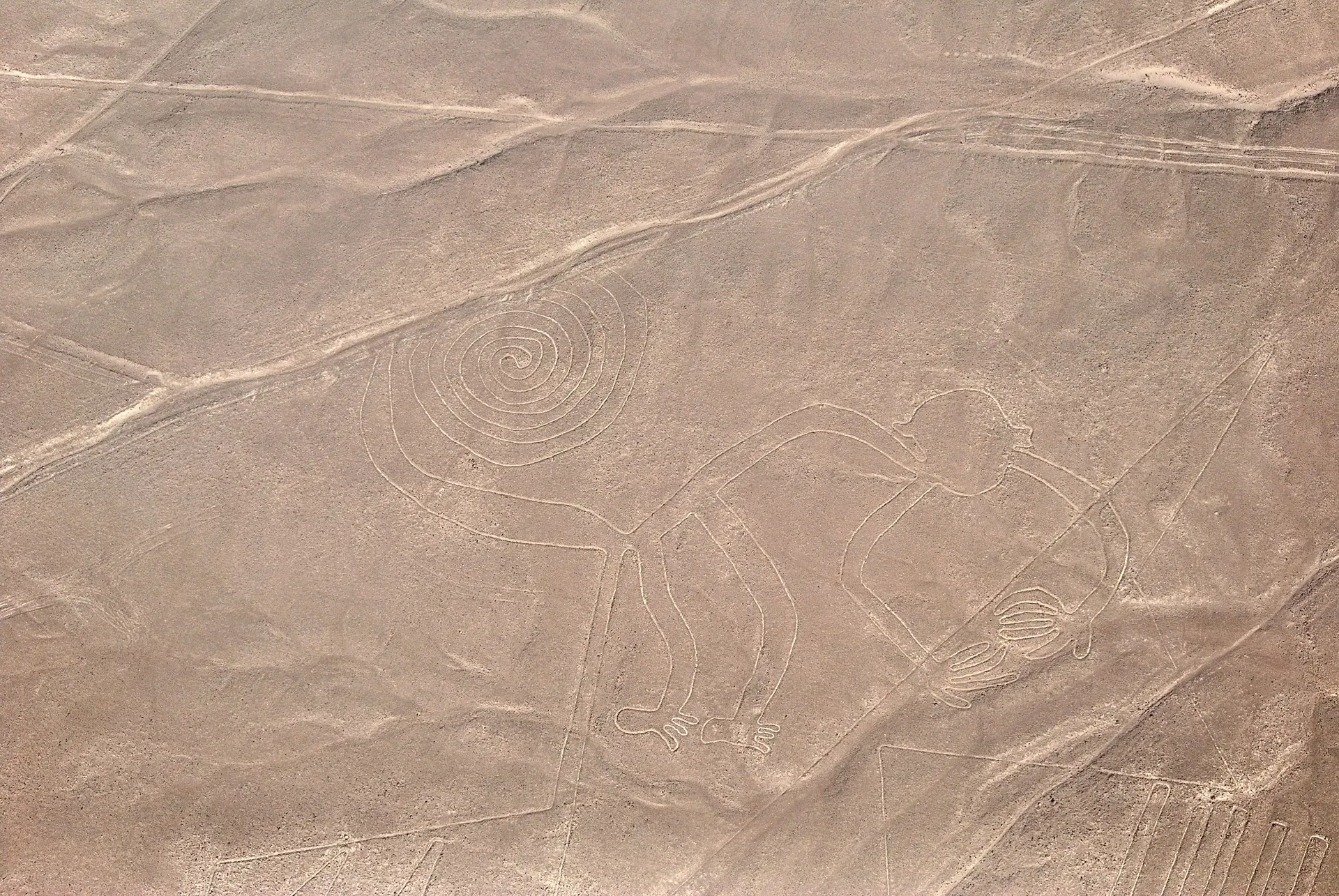
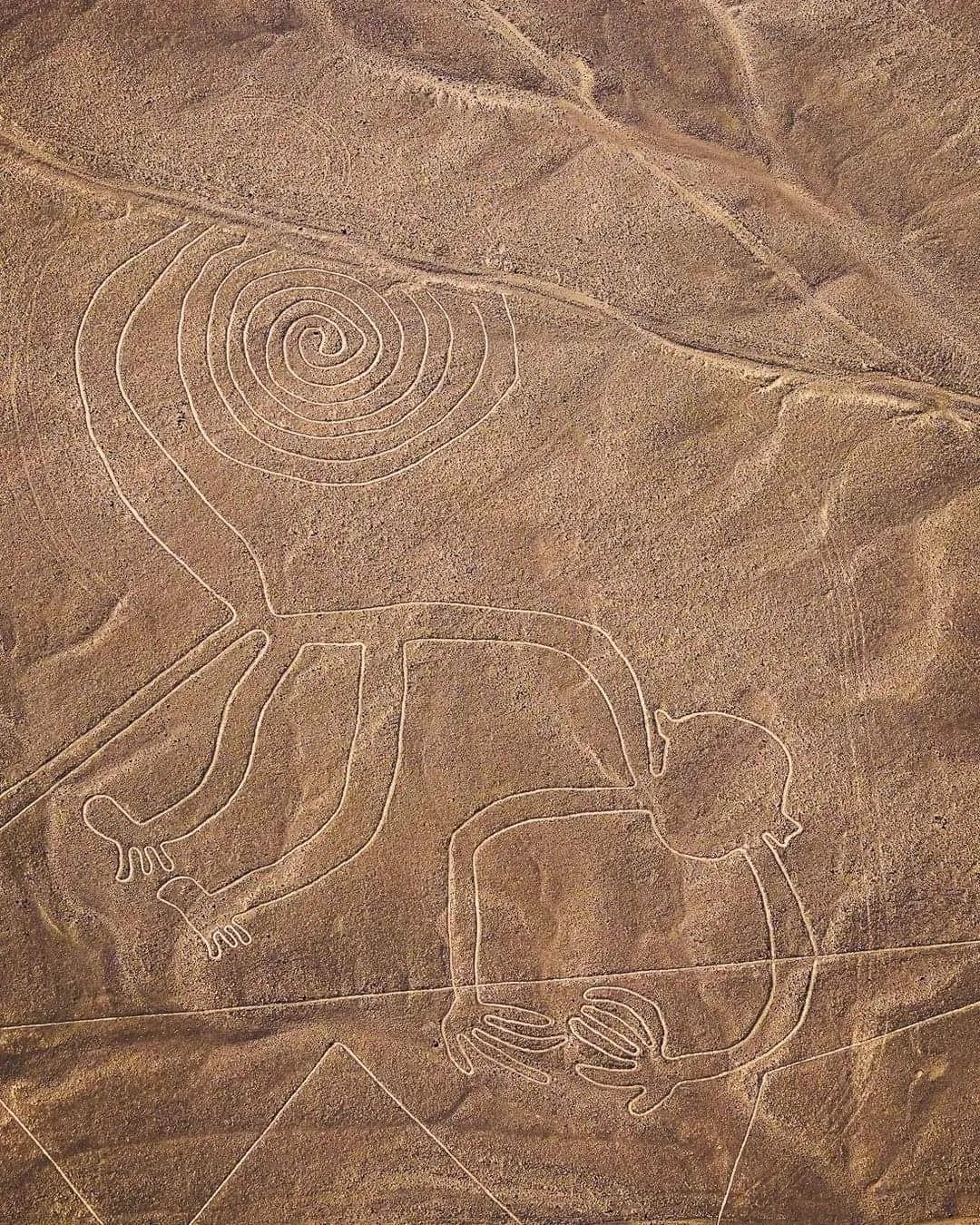
Eight hundred straight lines, 300 geometric patterns, and 70 animal figures scar the reddish-brown surface of the Nazca Desert. Ancient creators removed 4 to 15 inches of iron oxide-coated rocks to expose the lighter yellow-gray clay beneath. This massive collection of geoglyphs covers 175 square miles of arid plateau in southern Peru. You can only grasp the true scale of these designs from the air. Small Cessna aircraft bank sharply at 1,500 feet, pressing passengers against the windows to reveal a 277-foot monkey with a coiled tail or a 100-meter condor. The cabin smells of aviation fuel and gets hot quickly. Intense desert heat exceeding 30°C between December and March creates haze that obscures the ground.
Designated a UNESCO World Heritage Site in 1994, the area ranks among the driest places on Earth. Rain almost never falls here. Wind rarely blows. This stable climate preserved the shallow trenches for two millennia. Travelers reach the site by driving 400 kilometers south from Lima along the Pan-American Highway. Overnight buses departing Lima between 9:00 PM and 11:00 PM arrive in Nazca early in the morning, costing between $179 and $209 USD. Alternatively, a private shuttle from the Wild Rover Hostel in Huacachina covers the 150-kilometer distance in two and a half hours for $16 USD. Ground-level viewing exists, but it limits perspective. A 13-meter metal tower at kilometer 419 lets you climb steep stairs to look down at three specific figures: the Hands, the Tree, and the severed tail of the Lizard. Bring exactly S/3 to S/7 in cash to pay the roadside entrance fee.
Boarding the small planes requires physical coordination. Manual or power wheelchair users must arrange boarding support directly with flight operators, as the aircraft lack ramps. The steep banking turns easily induce nausea in children and elderly travelers. Parents should ensure children are hydrated and consult a doctor about child-safe motion sickness remedies. Take a motion sickness pill 30 minutes before boarding and avoid eating a heavy breakfast.
Indigenous populations carved these massive desert figures between 500 BCE and 500 CE. The timeline spans two distinct cultural periods. Paracas people initiated the practice from 400 to 200 BCE, focusing heavily on human-like figures etched into hillsides. Nazca communities took over from 200 BCE to 500 CE, shifting the designs to the flat plains and creating the massive animal and geometric shapes visible today. They worked by hand. Builders moved millions of dark surface stones aside to reveal the lighter subsoil, using wooden stakes and cotton ropes to maintain perfectly straight lines stretching up to 30 miles.
Spanish conquistador Pedro Cieza de León published the first written record of the site in 1553. He mistook the long, straight clearings for indigenous trail markers. Luis Monzón followed with similar observations in 1569. The designs sat largely ignored by the outside world for another four centuries. Commercial aviation in the 1930s finally revealed the full pictorial nature of the desert floor. Pilots flying over the high plateau suddenly recognized birds, monkeys, and spiders instead of random paths.
German mathematician Dr. Maria Reiche arrived in 1940 and transformed our understanding of the site. She spent fifty years sweeping the lines with a broom, measuring angles, and fighting off highway developers. Reiche argued the geoglyphs functioned as an astronomical calendar aligning with the winter solstice. Modern researchers lean toward water and fertility rituals, noting that many depicted animals are strongly associated with rain in Andean mythology. Visitors can learn about her work at the 40-seat Planetarium Maria Reiche in Nazca city, which offers daily lectures and telescope viewings.
Peru's Ministry of Culture now strictly controls the 450-square-kilometer archaeological zone. Unauthorized entry is a federal offense. Activists and truck drivers have damaged the fragile soil in recent decades, leaving tire tracks and footprints that will last for generations. Trespassing or damaging the lines carries severe legal penalties, including heavy fines and potential imprisonment under Peruvian cultural heritage protection laws. Check-in at the Maria Reiche Neuman Airport requires an original physical passport, and security denies boarding to anyone carrying only a paper copy.
The Nazca plateau sits at an elevation of 1,710 feet between the towns of Nazca and Palpa. A distinct geological layering makes the geoglyphs possible. The desert surface consists of dark, reddish-brown pebbles coated in iron oxide. Directly beneath this protective armor lies a high-contrast layer of light, yellow-gray clay and lime soil. Ancient builders simply scraped away 4 to 15 inches of the dark topsoil. The exposed lime hardens when exposed to morning mist, anchoring the surrounding stones and preventing wind erosion.
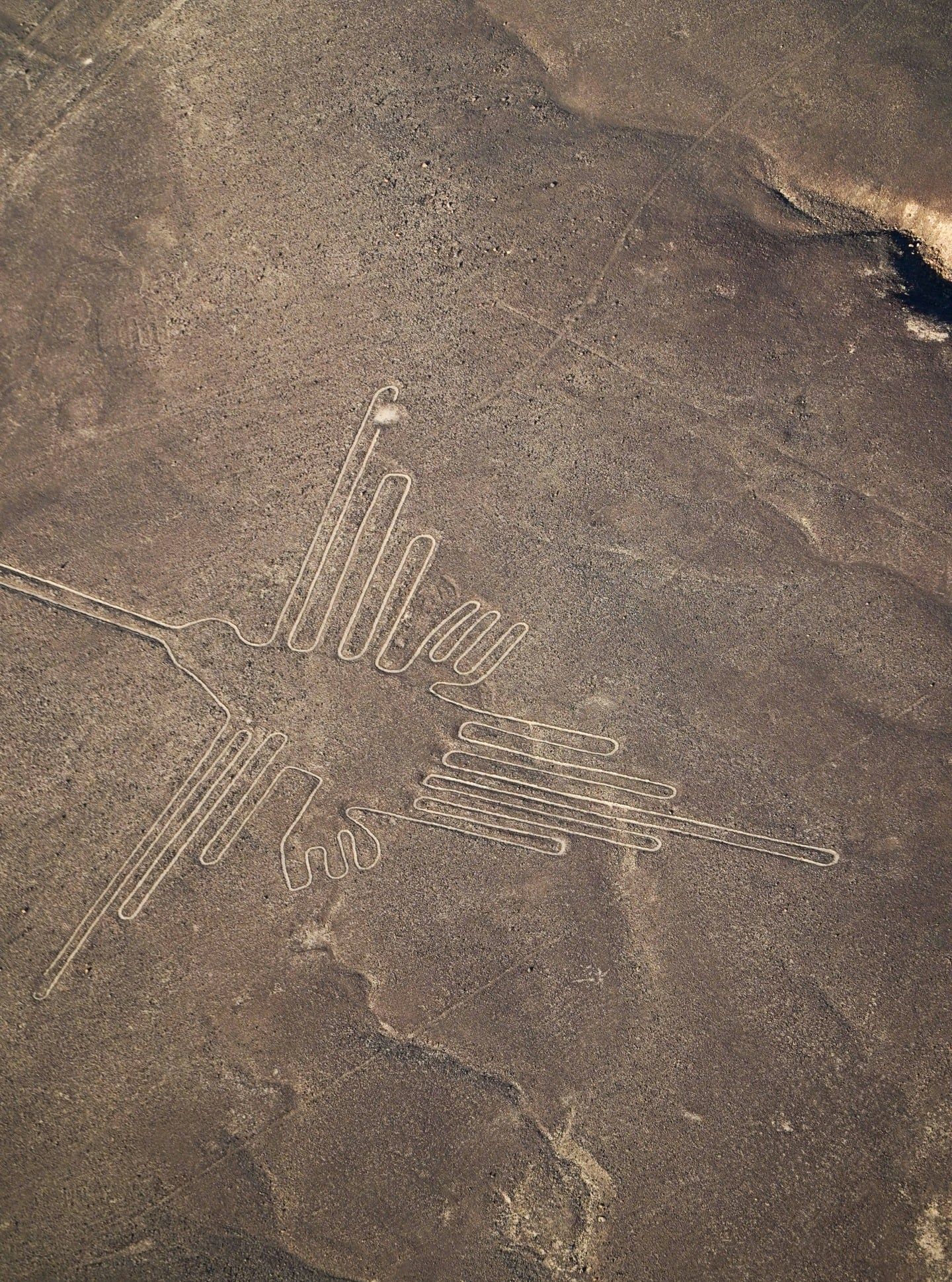
Straight lines dominate the 80-kilometer stretch of desert. Some run perfectly true for nearly 30 miles, crossing dry ravines and climbing hills without deviating from their original trajectory. Geometric shapes include massive trapezoids, spirals, and triangles that resemble modern airport runways. The 70 zoomorphic and botanical figures feature continuous, unbroken lines. The 277-foot Monkey is drawn with a single path that outlines its outspread hands and tightly coiled tail. The Condor stretches 100 meters across the plain, its beak and wings defined by stark white trenches against the dark rock. The Spider, an intricate zoomorphic drawing, requires pilots to bank steeply so passengers on both sides can see its delicate legs.
Viewing these features requires navigating specific physical constraints. Standard flights from Nazca cost between $85 and $120 USD and last 30 to 35 minutes. Flights from Pisco or Paracas cost $300 to $380 USD and take 90 to 100 minutes. Persistent coastal fog, known as garúa, grounds Pisco flights frequently from June to September. May to October offers the clearest skies and most comfortable temperatures for flying. Photography from the air demands a zoom-lens camera or a window-mounted action camera. Personal drones are strictly prohibited over the archaeological zone, and commercial filming requires special permits. Bring S/30 for the airport tax and S/47 for the tourist ticket, as officials only accept cash at the terminal.
Pre-Hispanic Andean societies built their religious and cultural lives around water. The Nazca Desert receives less than an inch of rain annually. Researchers tie the massive geoglyphs directly to this desperate need for moisture. The figures act as open-air temples where priests walked the continuous lines during ceremonies dedicated to water and fertility deities. Spondylus shells and shattered pottery found along the edges of the drawings indicate ritual offerings made to the gods.
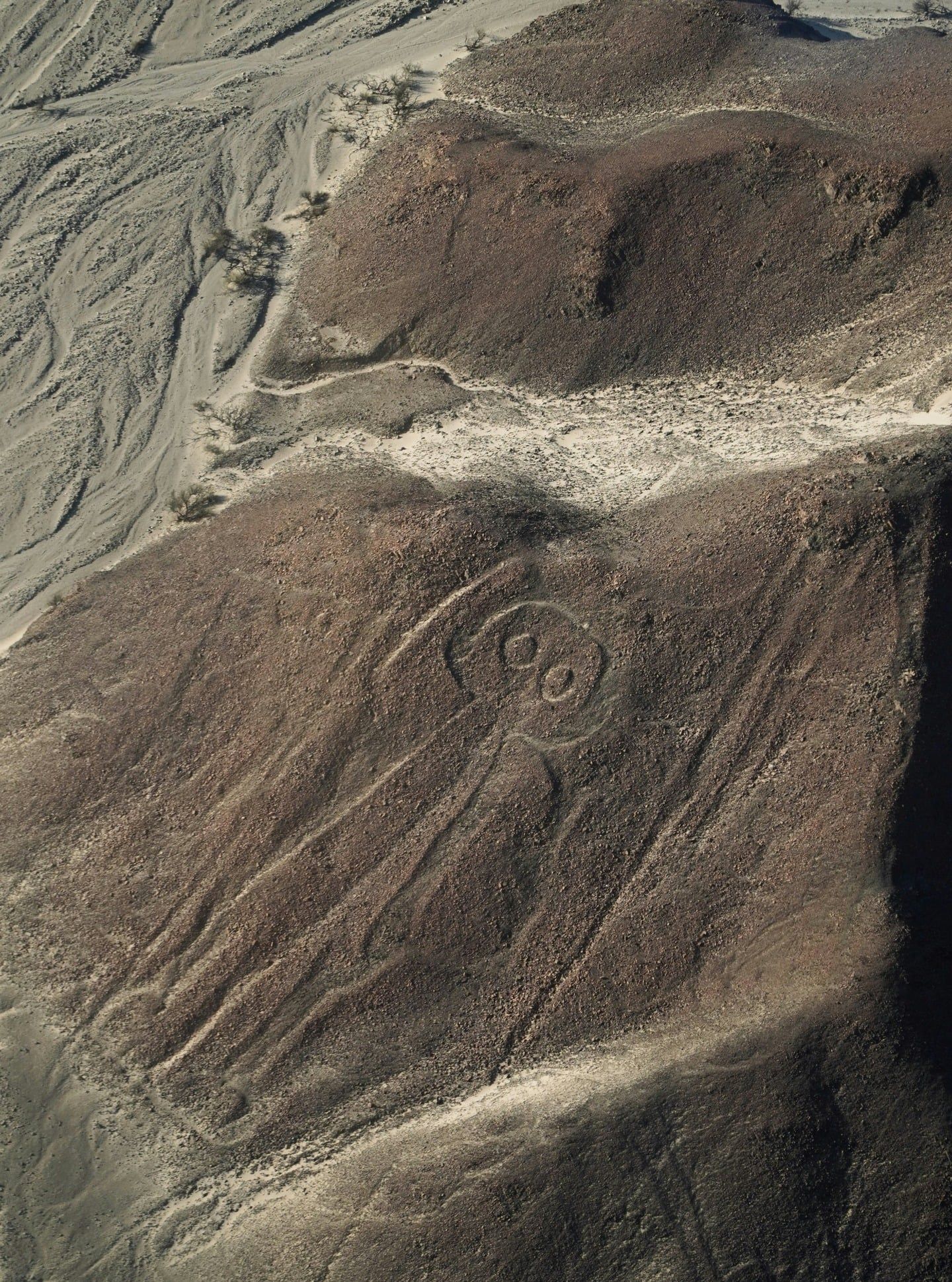
The specific animals chosen for the desert canvas reinforce this connection. Spiders, monkeys, and hummingbirds originate in the humid Amazon basin or appear just before heavy rainfall in the Andes. Drawing them on a massive scale signaled a plea for rain. The mysterious Astronaut figure, etched into a hillside with a bulbous head and waving arm, likely represents a stylized shaman or deity watching over the plains.
Local identity remains deeply tied to the lines and the surrounding desert landscape. The nearby Cantalloc Aqueducts, located a 15-minute drive from Nazca, still channel underground water through spiral stone chimneys. This system sustains agriculture in the dry environment, demonstrating the same engineering precision found in the geoglyphs. Forty-five minutes away, the Chauchilla Cemetery displays open-air tombs with mummies in traditional sitting positions, surrounded by original burial textiles and pottery. Twenty kilometers from the city, Cerro Blanco rises 6,820 feet above sea level as the highest sand dune in the region. Do not hail random taxis off the street to visit these locations; ask your hotel receptionist to call a licensed driver.
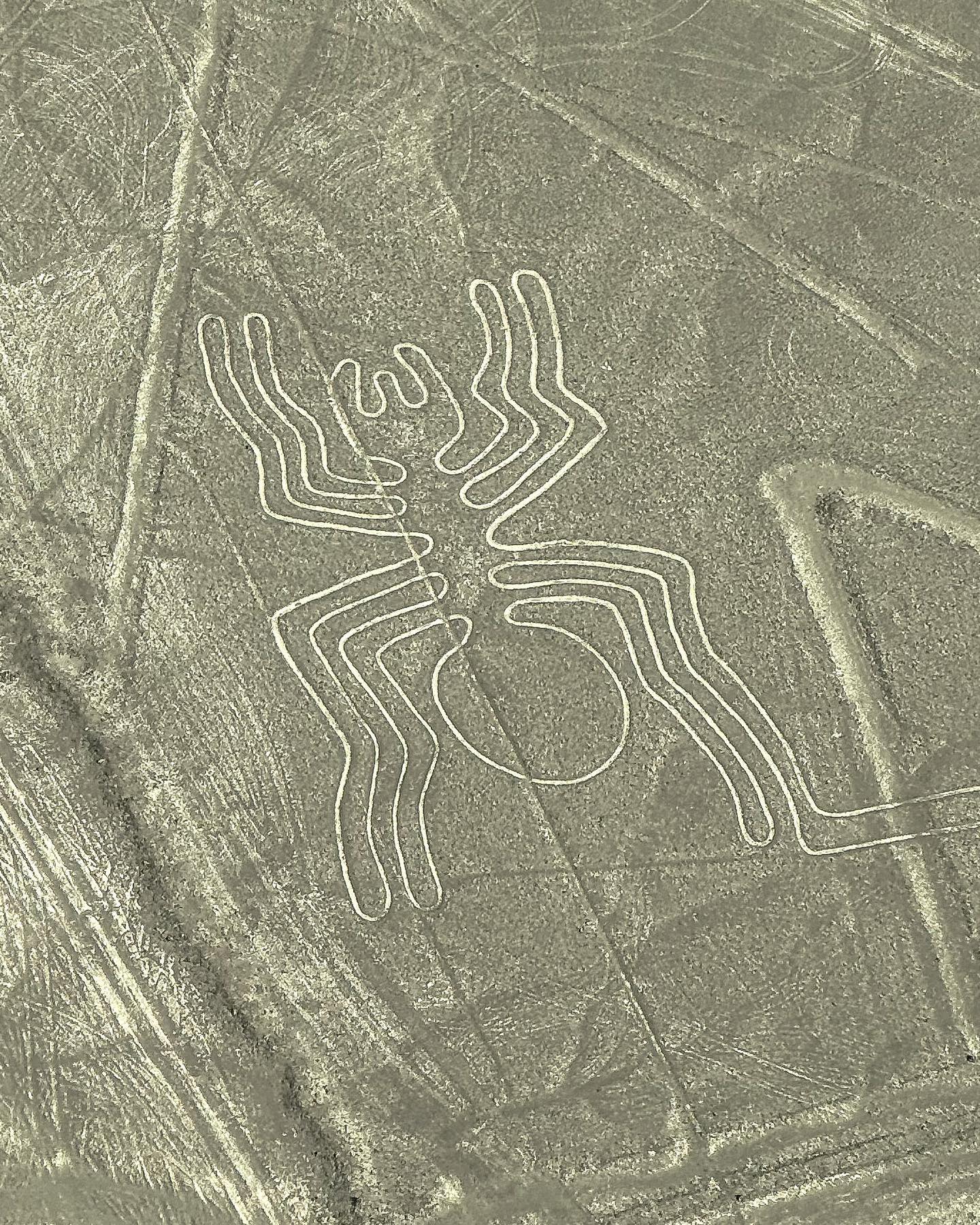
Some straight lines stretch for nearly 30 miles without deviating from their trajectory.
This 277-foot figure features a tightly coiled tail and outspread hands drawn with a single continuous line.
A giant-headed humanoid figure is etched into a hillside, resembling a modern space traveler waving to the sky.
A German researcher spent 50 years sweeping the lines with a broom to protect them from encroaching dust and debris.
Spondylus shells found near the lines suggest they functioned as open-air temples for ceremonies pleading for rain.
The extremely dry, windless climate has preserved the shallow trenches naturally for over 2,000 years.
This 100-meter avian figure represents a flying deity associated with mountain storms and agricultural cycles.
Standard 30 to 35-minute flights departing from Nazca cost between $85 and $120 USD. Travelers must also pay a S/30 airport tax and a S/47 tourist ticket in cash at the terminal.
Yes, you can climb the 13-meter roadside viewing tower located along the Panamericana Sur highway. The S/3 to S/7 entrance fee grants you an angled view of the Hands, the Tree, and part of the Lizard.
Ancient builders removed 4 to 15 inches of dark, iron oxide-coated surface pebbles. This exposed the lighter, yellow-gray clay and lime soil underneath, creating highly durable designs.
Early morning between 7:00 AM and 9:00 AM provides the optimal flight conditions. Desert winds are calmer, visibility is clear, and the lower sun angle casts sharp shadows that highlight the trenches.
Flights departing directly from the Maria Reiche Neuman Airport in Nazca last 30 to 35 minutes. If you fly from Pisco Airport, the total flight duration extends to 90 to 100 minutes.
Flights are tightly regulated by Peruvian aviation authorities to ensure passenger safety. Highly experienced pilots operate the tours, and aircraft undergo regular mechanical inspections and certifications.
You must bring your original physical passport, as copies are strictly rejected at boarding. Pack sunglasses, sunscreen, cash in Peruvian soles for local airport fees, and motion sickness medication.
The lines survive due to the extremely dry, windless, and stable climate of the Nazca Desert. The region receives almost zero rainfall, preventing the shallow incisions from washing away.
There are nearly 1,200 geoglyphs etched into the desert plains. This collection includes over 800 straight lines, 300 geometric patterns, and 70 distinct depictions of animals and plants.
Walking on the geoglyphs is strictly forbidden and constitutes a serious federal offense in Peru. Even a single footprint permanently damages the fragile soil drawings, and trespassers face heavy legal fines.
Browse verified tours with free cancellation and instant confirmation.
Find Tours